
Natural Gas Odorization in Indianapolis, Indiana: Midwest Reliability with Proportional Dosing, Pickling, and Ongoing Support
- Dec 28, 2025
- 7 min read
Indianapolis is a fast-growing Midwest city where residential neighborhoods, healthcare and educational campuses, downtown commercial buildings, logistics hubs, and light industry all rely on dependable natural gas. A core pillar of that dependability is odorization—the controlled addition of a detectable odorant to otherwise odorless natural gas—so leaks can be recognized quickly by the public and field technicians. Indianapolis experiences hot, humid summers, cold winters with freeze–thaw cycles, and storm events that introduce moisture and operational stress. The area’s soil variability and mixed pipeline materials (steel mains, polyethylene laterals, composite tie-ins) add layers of complexity. To keep gas detectably odorized year‑round, operators need accurate proportional dosing, disciplined pipeline conditioning and pickling, proactive odor fade prevention, routine and event-based verification, and thorough documentation.
Throughout this guide, you’ll see how a specialized partner like Burgess Pipeline Services can fit in naturally—supporting commissioning and pickling, calibrating and optimizing odorizer performance, designing sampling programs and QA routines, and providing maintenance and training that keep systems resilient as demand and seasons change. The aim isn’t a hard sell; it’s a reminder that you don’t have to carry all the technical and operational weight alone. Experienced odorization engineers can help you do the hard parts right—on schedule and within budget—so your team stays focused on safe, reliable service.
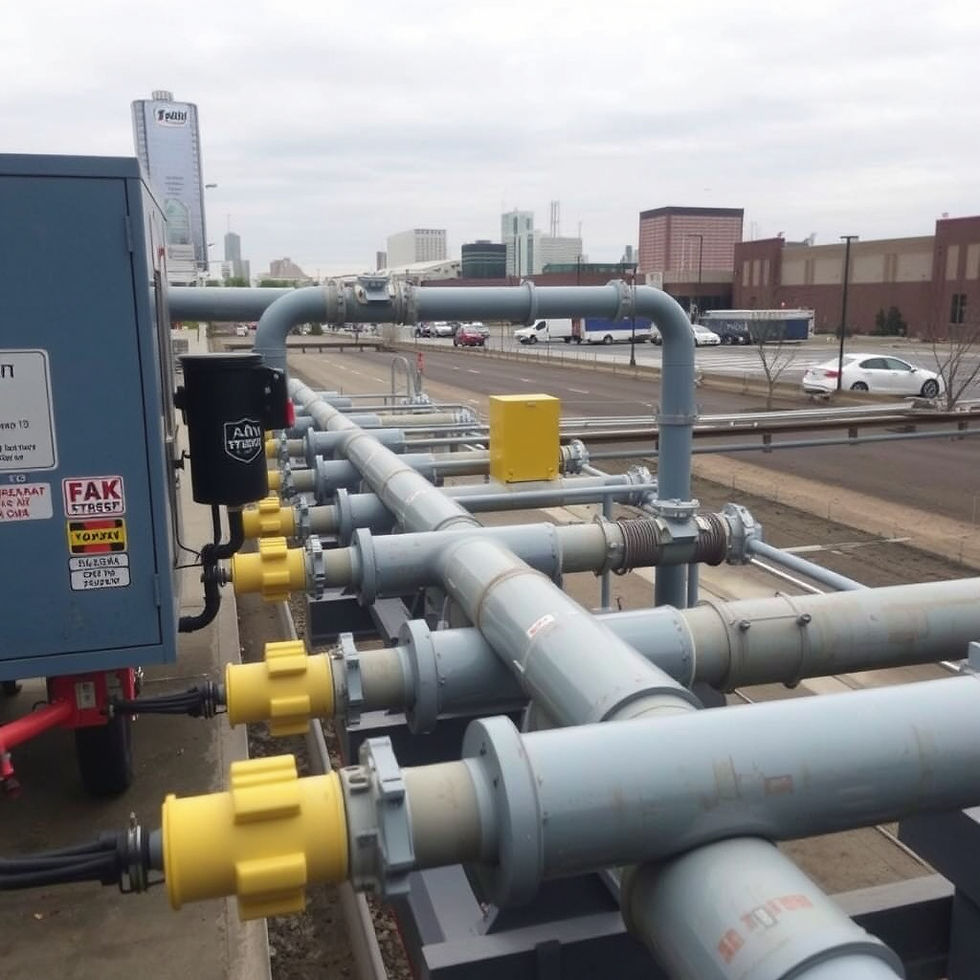
Odorization Fundamentals
Natural gas has no inherent smell. Odorization introduces very small amounts of sulfur-based odorants—most commonly mercaptans—to impart a strong, recognizable scent at minimal concentrations. In Indianapolis, maintaining detectability means accounting for worst-case conditions: overnight lows at peripheral endpoints, cold mornings that can challenge vaporization and injection stability, newly commissioned PE laterals that absorb odorant during early operation, and hot summer afternoons that drive enclosure temperature drift. A robust program sets detectability targets that reflect these extremes, validates proportional dosing across wide turndown ratios, and builds a monitoring plan that catches drift before customers do.
If you need help defining realistic detectability targets, matching odorizer technology to district load profiles, or building verification routes and records that stand up to audits, Burgess Pipeline Services can provide templates, hands-on support, and field-proven routines tailored to Indianapolis conditions.
Odorants: Mercaptan Selection and Handling
Mercaptan-based odorants such as tert‑butyl mercaptan (TBM), isopropyl mercaptan (IPM), and blended formulations are standard in distribution networks for their detectability at very low concentrations and predictable pipeline behavior. In Indianapolis, selection is less about swapping formulations seasonally and more about managing storage and transfer environments so dosing stays consistent through humidity and temperature swings.
Good practice includes:
Storage and enclosure: Sealed, properly vented tanks housed in enclosures designed for winter cold and summer heat; secondary containment and leak detection protect facilities and personnel.
Transfer and safety: Compatible hoses, gaskets, and fittings; PPE and ventilation during transfer; tested spill-response procedures; clean, organized transfer zones to avoid contamination and nuisance odor events.
Quality control: Routine checks for odorant purity and water contamination. Construction and tie-ins can introduce moisture even in cold months and must be addressed.
Documentation: Batch numbers, delivery logs, storage conditions, transfer procedures, calibration events, and maintenance activities recorded consistently.
When operators want standardized procedures or refreshed documentation, Burgess Pipeline Services can bring checklists, training, and on-site coaching so your team operates consistently and confidently.
Odorizers: Technologies and Selection Criteria
Indianapolis’s load profile mixes morning/evening residential peaks, steady commercial demand, campus variability, and industrial corridors. Odorizers must maintain accuracy at both low and high flows and perform reliably in heat and cold.
Common choices:
Pump-based liquid injection: Proportional dosing tied to measured flow; a strong match for mixed-demand districts. Reliability depends on routine calibration, seal/gasket maintenance, filter inspections, and low-flow validation.
Vaporizer systems: Effective in steady-flow segments; require robust thermal control to avoid dosing drift during cold mornings or hot afternoons.
Electronic proportional injection (EPI): Real-time modulation based on flow measurement; ideal for pronounced diurnal variation; depends on sensor integrity, telemetry, and well-configured alarms.
Selection guidance:
Confirm turndown capability for overnight lows and peak demand.
Ensure enclosures manage both summer heat and winter cold, minimizing condensation and temperature-driven drift.
Match system complexity to maintenance capacity and spares strategy.
Favor telemetry that surfaces anomalies early and supports proactive decisions.
Evaluate lifecycle costs—calibration effort, consumables, downtime risk, and vendor support—not just purchase price.
If you’re weighing options or fighting a legacy setup that struggles at the extremes, Burgess Pipeline Services can assess your districts, compare technologies, and model dosing behavior across seasonal conditions to recommend a practical, supportable configuration.
Odor Fade: Causes, Detection, and Prevention
Odor fade occurs when odorant intensity drops below detection thresholds due to adsorption/absorption, moisture and oxidation reactions, temperature effects, and flow behavior. In Indianapolis, risks cluster around commissioning of new PE segments, storm-driven moisture events, freeze–thaw cycles, and low-flow endpoints.
Prevention toolkit:
Thorough conditioning and pickling: Saturate pipeline surfaces before steady-state operation; validate carry-through with multi-point sampling.
Moisture management: Dry-down and filtration; inspection of traps and drains after storms; construction protocols that minimize water ingress.
Thermal control: Enclosure heating/insulation for winter and ventilation for summer; monitoring of enclosure temperatures to prevent dosing drift.
Flow-aware proportionality: Validate proportional injection across wide turndown ranges and recheck after load changes.
Routine and event-based sampling: Weekly/biweekly routes plus checks after tie-ins, maintenance, storms, and seasonal transitions.
Utilities often ask for practical, hands-on help in these areas. Burgess Pipeline Services can lead pickling plans, set sampling grids, tune dosing through seasonal transitions, and train crews to spot early fade indicators before complaints escalate.
Pipeline Conditioning and Pickling: Doing It Right the First Time
Commissioning without disciplined conditioning and pickling invites odor fade and prolonged stabilization. A practical Indianapolis plan:
Mechanical cleaning: Pigging or flushing (where applicable) to remove debris, mill scale, and films that can adsorb odorant or catalyze reactions.
Moisture reduction: Controlled dry-down using dehydrated gas or, where permitted, nitrogen; validate moisture targets before introducing odorized gas.
Surface stabilization (if allowed): Approved conditioning/passivation to reduce reactive sites; follow documented procedures and record usage.
Pickling phase: Elevated odorant dosing to saturate internal surfaces; maintain until multi-point sampling confirms stable carry-through, then taper to steady-state.
Sampling and verification: Grid covering downtown corridors, suburban endpoints, and industrial lines; record time-stamped results and corrective actions.
Documentation and sign-off: Methods, concentrations, maps, results, and approvals archived for audits and future planning.
If your team is stretched, Burgess Pipeline Services can deliver turnkey commissioning—planning, execution, sampling, and documentation—so new pipe reaches steady-state faster with fewer odorization surprises.
Calibration, Monitoring, and QA/QC
Accuracy depends on calibration discipline and verification:
Align dosing parameters with measured flow; validate proportionality at low/medium/high loads; recheck after maintenance, tie-ins, or seasonal shifts.
Monitor dosing rates, pump health, tank levels, enclosure conditions, and communications integrity; configure thresholds and escalation paths.
Establish weekly or biweekly sampling routes and event-based checks after tie-ins or load changes.
Keep detailed logs: sampling results, calibration certificates, alarm histories, corrective actions, and customer feedback.
If you’re building or refreshing this QA/QC stack, Burgess Pipeline Services can help define thresholds, configure alarms, design sampling routes, and automate reporting so operations and compliance work from the same reliable data.
Compliance and Documentation
Strong compliance blends clear procedures with organized records:
Odorization, commissioning, corrective action, and sampling protocols with annual reviews.
Training records for odorant handling, odorizer maintenance, sampling, and incident response.
Commissioning packages archived for each segment with sampling maps and verification results.
Centralized sampling logs with time, location, method, results, anomalies, and resolutions.
If documentation is fragmented, Burgess Pipeline Services can standardize forms, consolidate archives, and train staff to collect audit-ready records consistently.
Operations Scenarios and Solutions
Scenario: Summer heat/humidity causes enclosure drift and dosing anomalies.Improve ventilation and temperature monitoring; validate proportionality during hot afternoons; adjust setpoints; increase sampling temporarily.
Scenario: Winter cold challenges vaporizer stability.Verify heating/insulation; temporarily adjust dosing; sample endpoints during cold periods; restore normal setpoints when stability returns.
Scenario: New PE tie-in shows weak odor at endpoints.Extend pickling with elevated dosing; verify dry-down; conduct multi-point sampling before tapering to steady-state.
Scenario: Industrial load change alters baseline flow and mixing.Recalibrate proportional injection; validate sensor accuracy; confirm downstream carry-through with targeted sampling; update monitoring thresholds.
When you need on-the-fly support, Burgess Pipeline Services can deploy odorization specialists to troubleshoot, implement fixes, and document resolution for future prevention.
Maintenance and Lifecycle Strategy
Plan maintenance to reduce risk and cost:
Inspect pumps, seals, heaters, enclosures, filters, and sensors on a schedule; replace consumables proactively.
Validate heating/insulation for winter and ventilation for summer; confirm dosing behavior across transitions.
Coordinate with odorant suppliers for reliability and technical support; track batches and deliveries.
Use analytics—sampling trends, calibration dates, alarm histories, corrective actions—to guide upgrades and parts stocking.
If maintenance backlogs grow, Burgess Pipeline Services can step in with preventive routines, spares strategies, and upgrade recommendations tailored to your districts.
Training, Safety, and Team Preparedness
Your people keep odorization effective:
Training on odorant properties, storage, transfer, spill control, and PPE.
Coaching on odorizer calibration, preventive maintenance, troubleshooting, and alarm response.
Standardized sampling techniques, instrument care, documentation standards, and audit readiness.
Incident response drills for customer feedback and suspected leaks.
For refreshers or onboarding, Burgess Pipeline Services offers workshops and field shadowing aligned to your equipment and procedures.
Community Engagement and Public Trust
Public trust grows with clarity and speed:
Provide straightforward instructions for reporting suspected leaks.
Respond promptly to weak-odor reports and share outcomes where helpful.
Coordinate with local emergency services for detection and response alignment.
Offer plain-language education on odorization and community roles in safety.
If you need materials or messaging, Burgess Pipeline Services can supply templates and guidance that keep communications consistent.
Practical Checklists
Odorization Readiness Checklist
Odorizer calibrated at low/high flows
Enclosure environment managed (heating/insulation/ventilation)
Moisture control procedures active
Commissioning/pickling plan executed
Sampling grid established and active
Telemetry and alarms configured and tested
Technician training and PPE confirmed
Incident response protocol documented
Commissioning Checklist
Mechanical cleaning/pigging complete
Dry-down validated to moisture targets
Surface stabilization applied (if permitted)
Elevated pickling dosing initiated
Multi-point sampling verified
Documentation and sign-offs archived
FAQs
What causes odor fade most often in Indianapolis?New PE segments not fully pickled, moisture introduced during storms or construction, oxidation in older steel mains, and seasonal temperature/humidity effects that influence equipment behavior.
How often should sampling occur?Weekly or biweekly routes, plus event-based checks after tie-ins, maintenance, or load shifts. Increase cadence during shoulder seasons and extreme weather.
Which odorizer technology fits mixed-demand districts best?Pump-based liquid injection or electronic proportional injection systems generally perform best across wide turndown ranges. Vaporizer systems suit steady flows with strong environmental control.
Do odorant formulations need seasonal changes?Most operators maintain consistent formulations while adjusting enclosure management and dosing strategies for heat and cold.
Conclusion
Indianapolis’s growing network benefits from an odorization program that is precise, resilient, and well-documented. By selecting odorizer technology aligned to local load variability and environmental conditions, commissioning pipelines with disciplined conditioning and pickling, preventing odor fade through moisture and proportional dosing management, and maintaining rigorous calibration and monitoring, operators keep natural gas detectably odorized across neighborhoods, campuses, and business districts. If you want support—from planning and commissioning to sampling, calibration, maintenance, and training—Burgess Pipeline Services can shoulder the work and keep your odorization program reliable all year.


