
How Pipeline Pickling Directly Impacts Odorization Performance
- Jan 4
- 4 min read
Pipeline pickling is often discussed in terms of corrosion control, cleanliness, and commissioning readiness. What is less widely understood is how strongly pickling influences odorization performance during startup and throughout the life of a pipeline.
Decades of research and field experience show that the internal condition of a pipeline surface determines how odorant behaves far more than injection equipment or setpoints. Pickling changes that surface condition in fundamental ways. When performed correctly and sequenced properly, it significantly reduces odor fade, shortens conditioning time, and improves long term odor stability.
Understanding the relationship between pipeline pickling and odorization allows utilities to avoid recurring odor problems and achieve predictable results from the moment gas is introduced.
What Pipeline Pickling Does to the Internal Surface
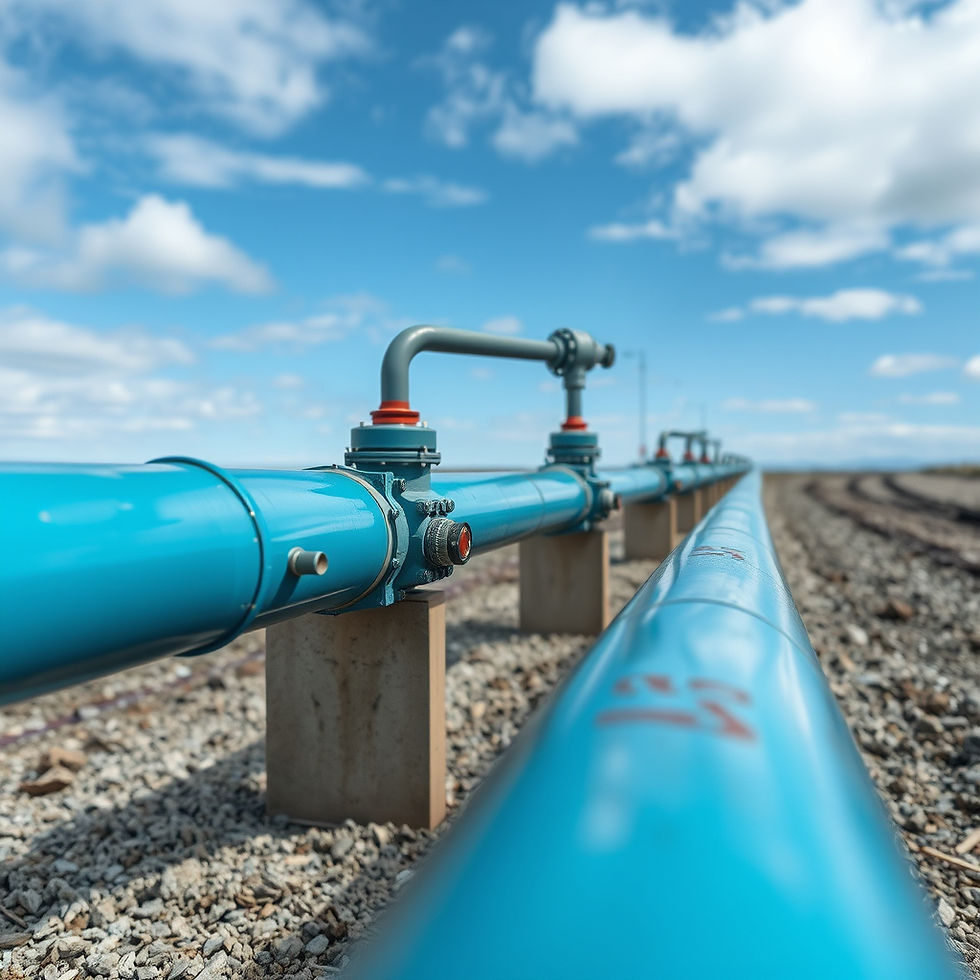
Pipeline pickling is the controlled chemical cleaning of the internal pipe surface to remove mill scale, rust, welding residue, and other reactive contaminants.
From an odorization perspective, these materials matter because they contain iron oxides that actively react with sulfur based odorants. Untreated or partially treated surfaces behave like chemical sinks, consuming odorant until reactive sites are neutralized.
Pickling removes or stabilizes these reactive materials, reducing the number of active sites available to consume odorant.
Utilities that include pipeline pickling and conditioning as part of commissioning consistently experience faster odor stabilization and lower total odorant usage.
Why Unpickled Steel Pipelines Consume More Odorant
Steel pipelines that have not been pickled contain a mixture of mill scale, loose rust, and iron oxide films. These materials are highly reactive with mercaptan based odorants.
When odorized gas enters an unpickled pipeline, odorant molecules react with these surfaces immediately. This results in rapid odorant loss that cannot be corrected by increasing injection rates alone.
Field data shows that unpickled pipelines often require significantly more odorant during startup and may experience prolonged odor fade events if conditioning is attempted without surface preparation.
Pickling addresses the problem at its source by removing or passivating reactive materials before odorization begins.
The Difference Between Pickling and Conditioning
Pickling and conditioning are related but distinct processes.
Pickling prepares the internal surface by removing reactive contaminants. Conditioning neutralizes any remaining reactive sites through controlled odorant exposure.
When pickling is skipped or incomplete, conditioning becomes less efficient and requires more odorant to achieve stabilization. When pickling is performed properly, conditioning proceeds faster and with greater predictability.
Utilities that sequence pickling before conditioning achieve better outcomes than those that rely on conditioning alone.
How Pickling Reduces Conditioning Time
One of the most practical benefits of pickling is reduced conditioning time.
By removing the most aggressive iron oxides, pickling lowers the initial odorant demand required to quench the pipeline surface. Conditioning then focuses on a smaller and more uniform set of remaining reactive sites.
This reduction translates directly into faster startup timelines and earlier transition to steady state odorization rates.
For large diameter steel pipelines, the time savings can be substantial.
Pickling and Odorant Selection
Pickling also influences odorant selection strategies.
In unpickled pipelines, highly reactive odorants such as tertiary butyl mercaptan may experience excessive loss during early exposure. In pickled pipelines, the same odorant behaves more predictably and conditions surfaces efficiently.
This allows utilities greater flexibility in selecting odorants based on safety performance and long term stability rather than compensating for poor surface condition.
Coordinating pickling with pipeline odorization planning improves both performance and cost control.
Moisture Control and Pickling
Moisture plays a critical role in the relationship between pickling and odorization.
Residual water left after hydrostatic testing or cleaning can increase odorant loss when iron surfaces are present. Proper pickling procedures include thorough rinsing, neutralization, and drying to minimize moisture related effects.
When pickling is followed by effective drying, odorant stability improves significantly during commissioning.
Poor moisture control can undermine the benefits of pickling and lead to renewed odorant loss during startup.
Common Odorization Problems Caused by Incomplete Pickling
Several recurring odorization issues can be traced back to incomplete or improperly sequenced pickling.
Rapid odor fade immediately after startupExtended conditioning periods with high odorant consumptionInconsistent odor levels across the systemSeasonal odor fade sensitivityFrequent injection adjustments without stabilization
Recognizing these symptoms early allows utilities to address surface condition rather than chasing operational variables.
Integrating Pickling Into Commissioning Plans
Pickling delivers the greatest odorization benefits when integrated into a comprehensive commissioning plan.
This plan should consider pipeline material, diameter, operating pressure, temperature, and odorization strategy together rather than as isolated steps.
Utilities that treat pickling as part of odorization readiness rather than a standalone cleaning activity achieve more consistent startup outcomes.
Many operators now include pickling as a standard prerequisite for new steel pipeline commissioning.
Regulatory and Safety Implications
Federal odorization requirements depend on odorant remaining in the gas stream at detectable levels.
Unpickled pipelines increase the risk of odor fade during early operation, which can compromise compliance even when injection systems are functioning correctly.
Demonstrating that pickling and conditioning were performed as part of commissioning supports regulatory audits and shows proactive risk management.
Applying Pickling and Odorization Best Practices in the Field
At Burgess Pipeline Services, pipeline pickling is performed with a clear understanding of how it affects downstream odorization.
Each project is evaluated based on pipe material, internal condition, and odorization objectives. Pickling procedures are tailored to support efficient conditioning and stable long term odorization.
This integrated approach supports reliable outcomes across new construction, system expansions, and pipeline rehabilitation projects.
Pipeline pickling is not just about cleanliness. It directly shapes how odorant behaves inside the pipeline. When applied deliberately and sequenced correctly, it transforms odorization from a reactive challenge into a controlled process.


